
April 1, 2026
Clarity Before Action: How Equipment Finance Moves Forward
The Innovation Problem Nobody Is Talking About in Equipment Finance
Most equipment finance leaders are not struggling because they lack effort, budget, or access to technology. They are struggling because they are solving the wrong problem and doing it faster every year.
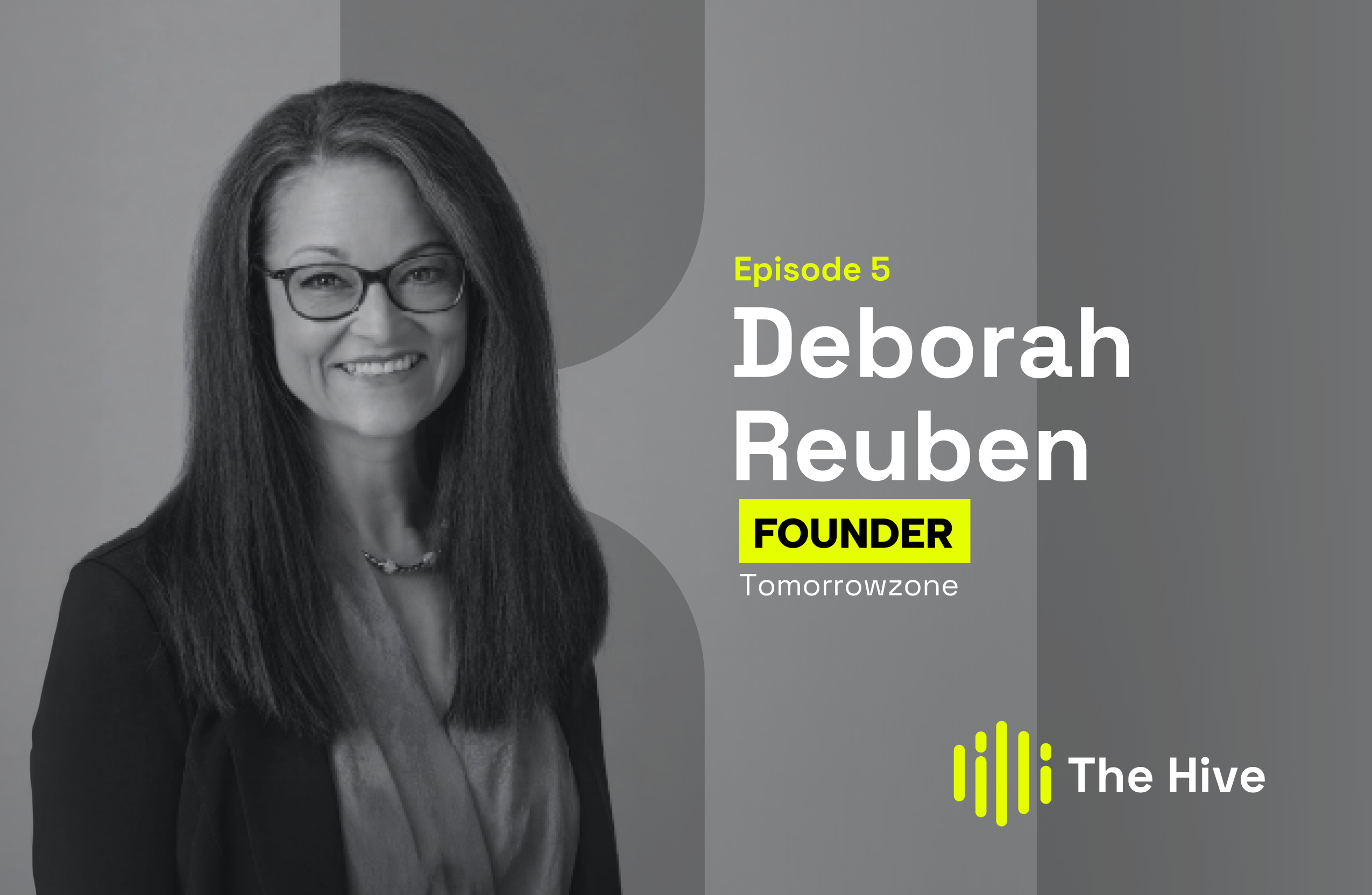
Deborah Reuben has spent over 20 years sitting with senior leaders across bank, independent, captive, and fintech organizations. As CEO & Founder of TomorrowZone and author of Enter the TomorrowZone, her diagnosis is precise: the industry has moved past asking why innovate to asking how and most teams are still stuck between the two.
Her conversation on The Hive by Kin Analytics covered the Yesterday Zone, the tech-first trap, innovation inside regulated industries, and why the leaders who define this decade are the ones who learn to pause before they build.
The Conversation Has Shifted But Most Leaders Haven't Caught Up
When Deborah started speaking on innovation stages in the early 2000s, getting technology topics onto the agenda at industry events was, as she put it, "like pulling teeth." Today, entire conferences are dedicated to innovation. The convincing is done.
"We don't have to convince people that innovation is necessary. The conversation has shifted to: what exactly do I need to do right now, practically, to actually get value?"
The industry has cycled through cloud versus on-prem, isolated solutions versus end-to-end ERP, and now AI. Each hype cycle brought the same dynamic: early resistance, then overcorrection, then the hard question of how to extract real value from the noise. The leaders who navigate that last question are the ones who understand that signing a software contract is not the same thing as solving a problem.
The Yesterday Zone: Where Innovation Goes to Die
The Yesterday Zone is the most recognizable pattern in equipment finance operations and the hardest to see from inside it.
"You could find yourself in a trap of rebuilding the past instead of shaping what's next, building around assumptions that have never been tested."
Deborah shared a direct example. A finance company was designing a customer portal. A senior leader insisted customers would never adopt a more modern experience. Someone raised their hand and said: actually, the next generation taking over these companies is asking for exactly that.
That is the Yesterday Zone in practice. Skating to where the puck was. Copying and pasting past assumptions onto new technology and calling it innovation.
At Kin, we see the same pattern in credit operations. Teams automate the intake workflow they have always had, not the one their credit decision actually requires. Processing speed increases. The underlying data quality problem stays exactly where it was.
The Tech-First Trap: Why Buying Software Feels Like Progress
This is the failure mode Deborah sees most often and the hardest to resist because it is genuinely satisfying in the short term.
"Buying new technology, implementing new technology actually feels like progress. But sometimes the real problem that we want to solve has nothing to do with technology."
Under pressure to deliver results, signing a software contract creates momentum. The trap is that momentum in the wrong direction is not progress, it is acceleration toward the wrong destination.
Deborah's framing: systems are not just software. They involve people, process, technology, policy, and the environment around all of them. A software license addresses one layer. The other four stay exactly as they were.
She worked with one leader whose mandate was clear: which software platform should we buy? After doing the deeper work of understanding the full system, the answer turned out to be none of them not yet. The real problem had nothing to do with software.
Innovation Inside Constraints: Why Regulation Is Clarity, Not a Barrier
Regulation is often used as a reason to move slowly. Deborah pushes back on that framing directly and uses one of the most well-known product stories in history to make the point.
Steve Jobs handed his design engineers a block of wood and said the device could be exactly that size and have no buttons. From inside those constraints came the iPhone. The constraints did not prevent the innovation. They focused on it.
"We don't want to copy and paste the past to new cool technology and call that innovation."
In equipment finance, regulatory boundaries are actually clear. They define exactly where you cannot go, which means you can move freely everywhere else. The challenge is not the regulation itself. It is whether your team has built the shared understanding of those constraints that makes creative work possible within them.
Clarity First, Then Technology, Always
This is the central principle of Enter the TomorrowZone, and the one Deborah returns to at every turn: clarity first, then technology.
Not clarity as inspiration. Clarity as a concrete prerequisite knowing what problem you are actually solving, for whom, and how you will measure success before a single vendor is evaluated.
For equipment finance leaders, this translates to one question worth asking before every automation investment: are we solving the actual problem, or the problem's most visible symptom?
Deborah's practical starting point is disarmingly simple. Create one hour this week. No agenda. One question: what problem am I actually solving and is it the right one? Not a team meeting. Not a deliverable. Just the question.
That is where the TomorrowZone starts.
Conclusion: Skate to Where the Puck Is Going
Deborah borrowed Wayne Gretzky's phrase that captures her entire body of work: skate to where the puck is going, not where it is right now.
The equipment finance leaders who will define the next decade are not the fastest movers. They are the ones who pause long enough to understand the direction before they accelerate. Technology has never been more capable. The question is whether the people deploying it have done the clarity work first or whether they are just moving faster toward the wrong destination.
When you evaluate your next technology investment, are you solving a real problem that improves the lives of your customers and your team or are you buying a Ferrari without a racetrack to drive it on?
Frequently Asked Questions
What is the Yesterday Zone in equipment finance leadership? The Yesterday Zone is the state where leaders optimize existing processes without questioning whether those processes are still worth optimizing. In equipment finance, it shows up when teams automate old intake workflows without asking whether those workflows produce the right credit outcomes to begin with.
What is the tech-first trap and how does it affect equipment finance lenders? The tech-first trap is when leaders select technology before fully understanding the problem they need to solve. Signing a software contract feels like progress but if the underlying process, data quality, or team alignment has not been addressed, the technology accelerates the wrong outcome.
How should equipment finance leaders approach AI adoption without falling into hype? Start with the outcome you want to improve credit accuracy, processing reliability, volume capacity and define how you will measure it before selecting any tool. Clarity about the problem must come before the technology decision, not after.
Why is innovation in regulated industries like equipment finance still possible? Regulatory constraints define boundaries, but boundaries focus creativity rather than prevent it. The leaders who treat regulation as clarity rather than as a barrier tend to move faster and more effectively than those who wait for perfect conditions.
What does "clarity first, then technology" mean in practice for equipment finance? It means defining the problem with precision before evaluating any solution. For credit operations, this means knowing whether you are solving for processing speed, data quality, or credit accuracy and having a metric for each before building or buying anything.
Who is Deborah Reuben and what is Enter the TomorrowZone? Deborah Reuben, is CEO & Founder of TomorrowZone® and author of Enter the TomorrowZone (2026). Named one of Monitor Magazine's 50 Most Powerful Women in Equipment Finance, she has spent 20+ years helping leaders across bank, captive, and independent finance organizations navigate transformation with a human-first, clarity-before-technology framework.
/Like this post?
You’ll love our newsletter.



.webp)

.jpg)